







Enhancing Operational Readiness
By Nick Satterly, BS, PM, CEMSO
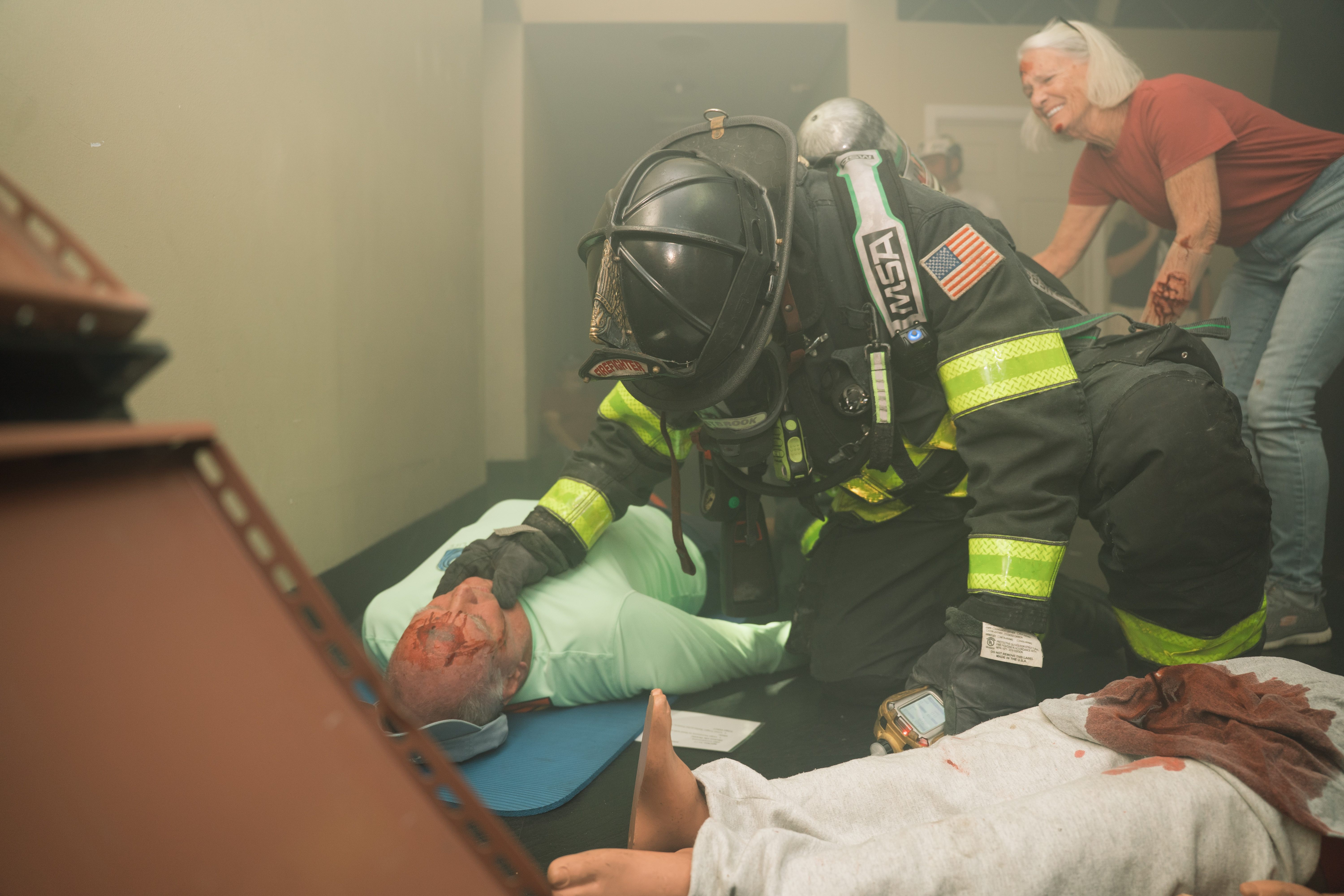
Like many agencies, North Port Fire Rescue Department in North Port, FL, prepares for and trains for incidents every day, but we rarely have the opportunity to train for a large-scale mass casualty incident (MCI) in a real-time, hands-on environment. Due to the logistics involved, we are usually handcuffed to tabletop scenarios or simple policy review.
While these are valuable and quite often the best we can do with internal constraints such as mandatory training, unit availability, and staffing, or external constraints such as call volume, these opportunities have to be seized whenever possible. Few things can replace the stress inoculation, experience gained, or the valuable tactical and operational insights gained from participating in a training exercise like this.
The Objective
North Port Fire Rescue Station 81 was slated for demolition at the end of 2025 to make way for a new fire station and administration building. We took the opportunity to use this space and conduct a large-scale MCI drill. The exercise was conducted over three days and included two sessions per day, allowing us to rotate through all units and stations on all three shifts. Neighboring agencies (Venice Fire and Sarasota County) were also invited and participated.
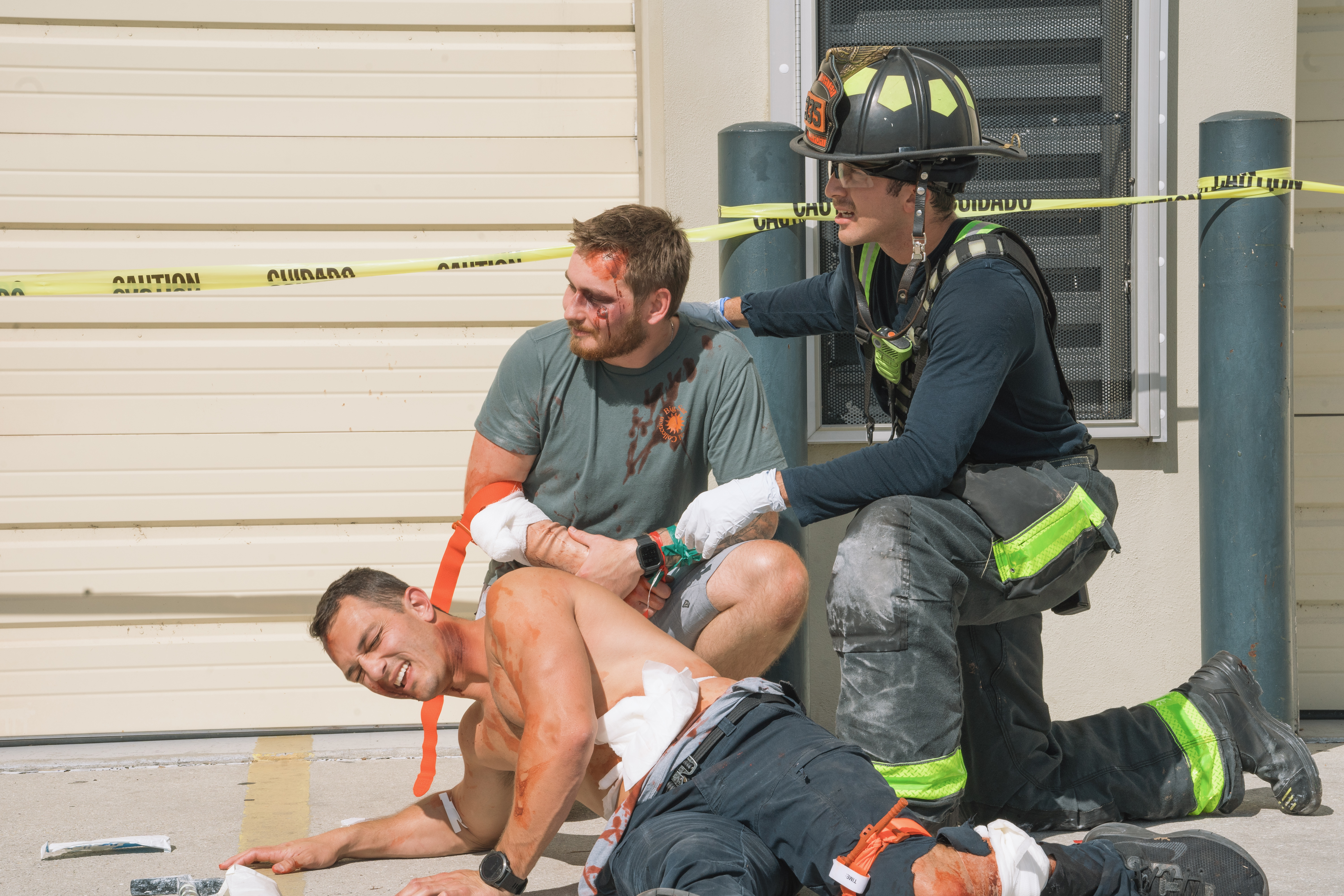
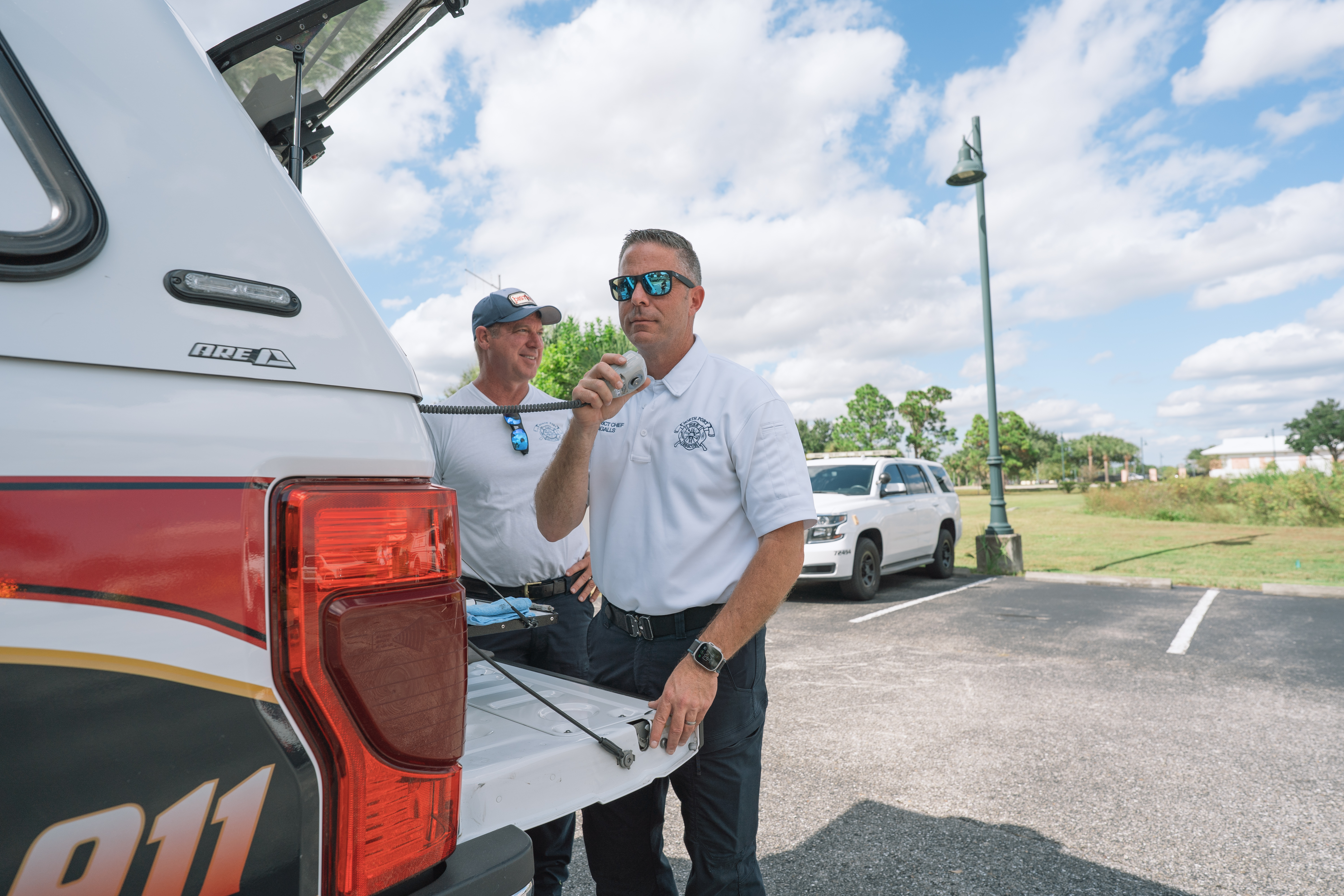
Additionally, our dispatch center (Sarasota) had three public safety dispatchers on-site. Each session had approximately 15 volunteers from local community emergency response (CERT) teams, citizens, off-duty personnel, and SMH North Port hospital employees to act as victims. The support we received from our regional partners and community members was crucial to accomplishing this exercise and an excellent way to engage with multiple external stakeholders in a positive and meaningful way.
Our objective for this exercise was to give our line personnel and command staff a real stressful environment, unit reflex time, radio communications, system overload, and command structure of a static MCI.
The Scenario
Each exercise consisted of five ALS transport rescues, four ALS suppression units, technical rescue team, and two chief officers. Two rescues and one suppression unit from this complement were from SCFD and VFD. All units were staged offsite, with a staging officer in place to assist with simulated reflex time that mirrored the response time of an actual incident within the NPFR district.
NPFR has a 90th percentile response time of less than six minutes; therefore, units were staged at five-minute intervals after dispatch. Additionally, to achieve the realistic unit availability time after being assigned a patient(s) to transport, an offsite location was established as a simulated ED for the rescues to transport patients to and transfer them to hospital staff.
The on-site dispatchers initially dispatched a single suppression unit and rescue to 4980 City Center Blvd. to assess storm damage. Units were updated en route that multiple callers were reporting interior structural collapse and various patients. This prompted the dispatch of a district chief and technical rescue team response. The first unit arrived on scene to find a large commercial structure with no apparent signs of external structural damage. The first arriving officer performed a 360 of the structure to identify simulated downed power lines and secured all other utilities to the structure.
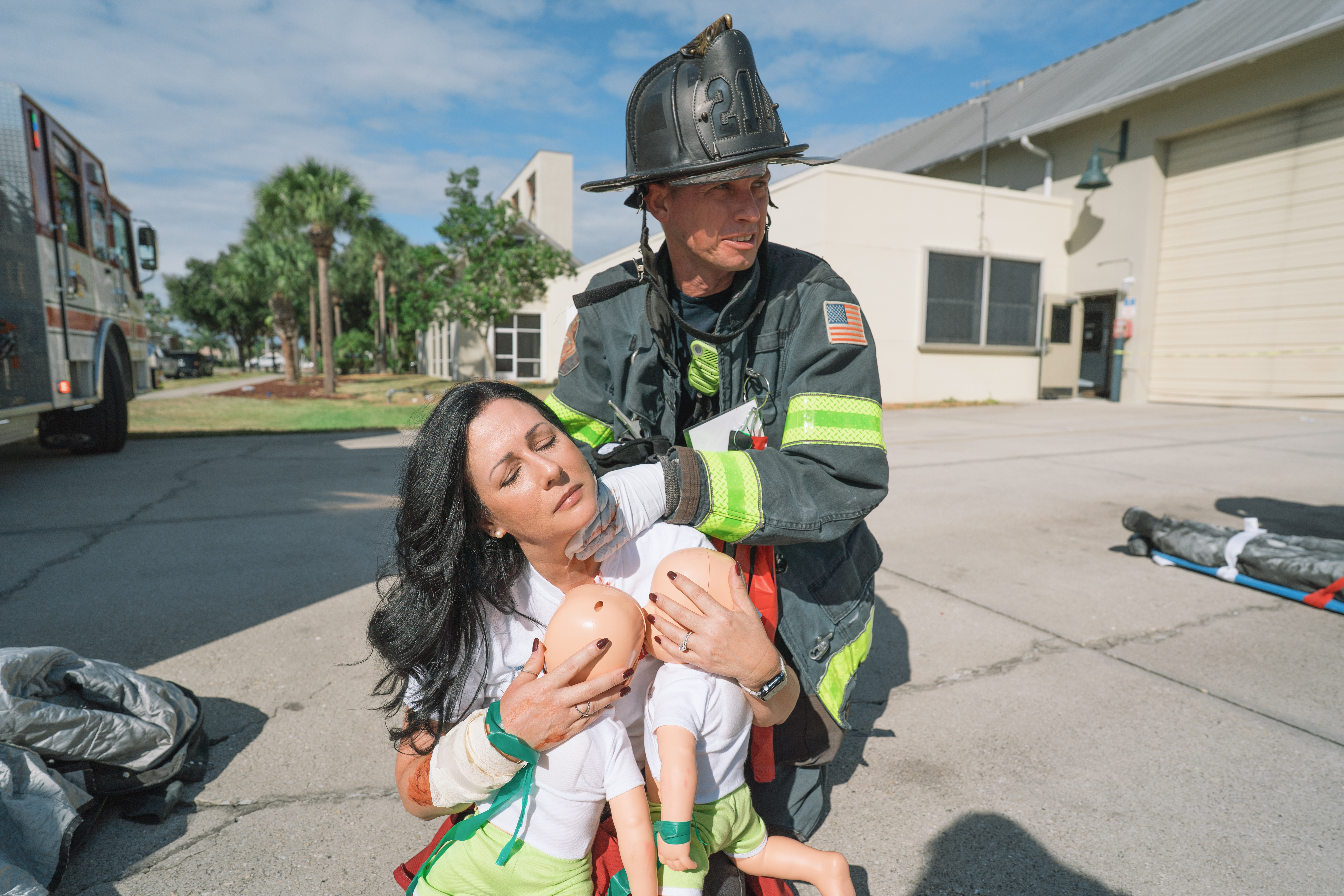
First-arriving crews encountered limited access and reports of multiple patients. Once inside, the first crews are met with 25 patients to include live victims and high fidelity manikins (used as the patients who were pinned/trapped under load and severe injuries such as impalements and amputations).
The first chief officer arrives and is met with a victim outside who reports that there are at least 20 people inside, and many are trapped. At this point, per NPFR policy, incident command (IC) will declare a Level 2 MCI to receive the appropriate level of resources and activate the emergency operations center (EOC) for additional resource needs. IC designates the officer operating inside as the triage group leader and begins primary triage of the patients.
The triage group has limited visibility due to simulated construction dust and insufficient interior lighting. The triage group leader reports back an approximation of the number of victims, and the situation requires a technical rescue team response due to multiple patients trapped under the collapse with limited access. The following arriving units are assigned the responsibility for the treatment group and the transport groups, respectively. The technical rescue team will arrive on scene to find limited access to multiple trapped patients, requiring collapse shoring, tunnelling, and lifting/stabilization of collapse debris to gain access to, appropriately treat, and remove a patient with a crush injury and a patient with an impalement.
Operational Performance: What Went Well
Incident command was established early and accountability was managed incredibly well. Early identification of the approximate victim count quickly established the appropriate level of MCI response, and early identification of additional hazards and interior conditions allowed the IC to establish the proper command structure and tasks that needed to be accomplished. Timely assignments to the triage, treatment, transport, and technical rescue groups ensured tasks were completed in a priority-based order.
Using rapid assessment of mentation and pulse (RAMP) triage and triage ribbons, the initial triage was rapid and highly accurate. Treatment areas were selected with purposeful thought to remove patients from the area of immediate danger and to allow responding transport units the best possible ingress and egress from the scene. The Pulsara communications app provided tremendous operational insight into which patients were transported and their triage status via the Pulsara incident dashboard.
The treatment group and the treatment officer provided timely and appropriate treatment, enabling accurate secondary triage and ensuring that the highest-priority patients were transported quickly to the most suitable facility.
Lessons Learned
As with any after-action report, the most common theme of communication improvement was noted in each of our evolutions. We identified a common theme of radio discipline and the need to transmit only pertinent radio traffic. Many crews initially began reporting each patient's triage level directly to the IC rather than verbally to the triage group supervisor. At each evolution, the IC identified this issue quickly and instructed crews to transmit only mission-critical information over the radio. This early identification and instruction proved effective in reducing unnecessary radio traffic.
Another area of note was the ambulance crews spending a significant amount of time with a patient(s) in the patient compartment of the rescue, performing additional assessments and treatments. This put a strain on the availability in an already resource-limited situation. The transport group supervisor in each scenario noticed and corrected when they started to become overwhelmed by patients in the treatment area, and resources were limited.
Key Takeaways
After observing six separate evolutions, each with a new incident commander and crews, a few items became clear for achieving the best outcome in an incident like this.
- Establish the command structure quickly, with triage, treatment, and transport branches created as early as practical.
- Use suppression apparatus as functional groups with assigned group supervisors, leaving transport rescues available for patient transport.
- Establish the treatment area deliberately to optimize ingress and egress for transport units, relocating it if necessary. Getting this right can make or break a scenario.
- Limit radio communications to pertinent traffic and, when possible, route communications through group supervisors.
- Restrict use of the operational radio channel to units assigned to the incident; require transport units to exit the channel once patient transport begins.
- Initiate a new incident in Pulsara through the treatment group when feasible, allowing arriving transport units to join and ensuring accurate patient accountability.
Policy, Procedure, Equipment, and Training
Conducting this drill allowed us to take an objective stock of our current policies, procedures, equipment, and future training needs. Currently, we use rolls of colored triage ribbons. We will move to a system of quick-rip ribbons attached to a durable RAMP triage card. Initial triage should be rapid and not cumbersome, as we found during this exercise when using the ribbon wheels.
It has become clear after participating in both active shooter hostile event response (ASHER) and MCI drills that there is enough of a difference, both tactically and logistically, to warrant a clear policy divide. We will work towards a static MCI policy, where all patients are produced from a single event (e.g., vehicle accident, exposure, or collapse), and a dynamic MCI policy, where patients are made from an evolving incident (e.g., hostile event response).
We’re now planning semi-annual MCI/ASHER training with an emphasis on interagency planning, cooperation, and policy development.
Final Thoughts
While this training exercise requires a tremendous amount of planning, support, logistics, and external stakeholder participation, the insights and experience gained are invaluable for the success of a high-acuity/low-frequency incident like this, ensuring a positive outcome. I encourage any agency to take on the challenge of organizing a similar exercise and, more importantly, to provide an honest, objective account of how prepared your agency is for an incident like this and to take the steps to ensure your crews and command staff are best prepared.
About the Author
Nick Satterly, BS, PM, CEMSO, brings 16 years of fire service experience across roles from paramedic to station officer, EMS Operations Captain, and QA/QI Officer. He currently serves as the Division Chief of EMS for North Port Fire Rescue, overseeing EMS operations.