







Peer Support Training Program Extends Benefits to Retirees
While a job in EMS may end in retirement, responders’ need for community never does. To meet this need, UCF Restores—based at the University of Central Florida—offers a peer support training program called REACT:
- Recognizing different stress injuries common among first responders and healthcare workers
- Evaluating the presence of a stress injury in a peer
- Advocating for appropriate resources to be provided to a peer
- Coordinating higher levels of care for the peer
- Tracking a peer’s progress over time
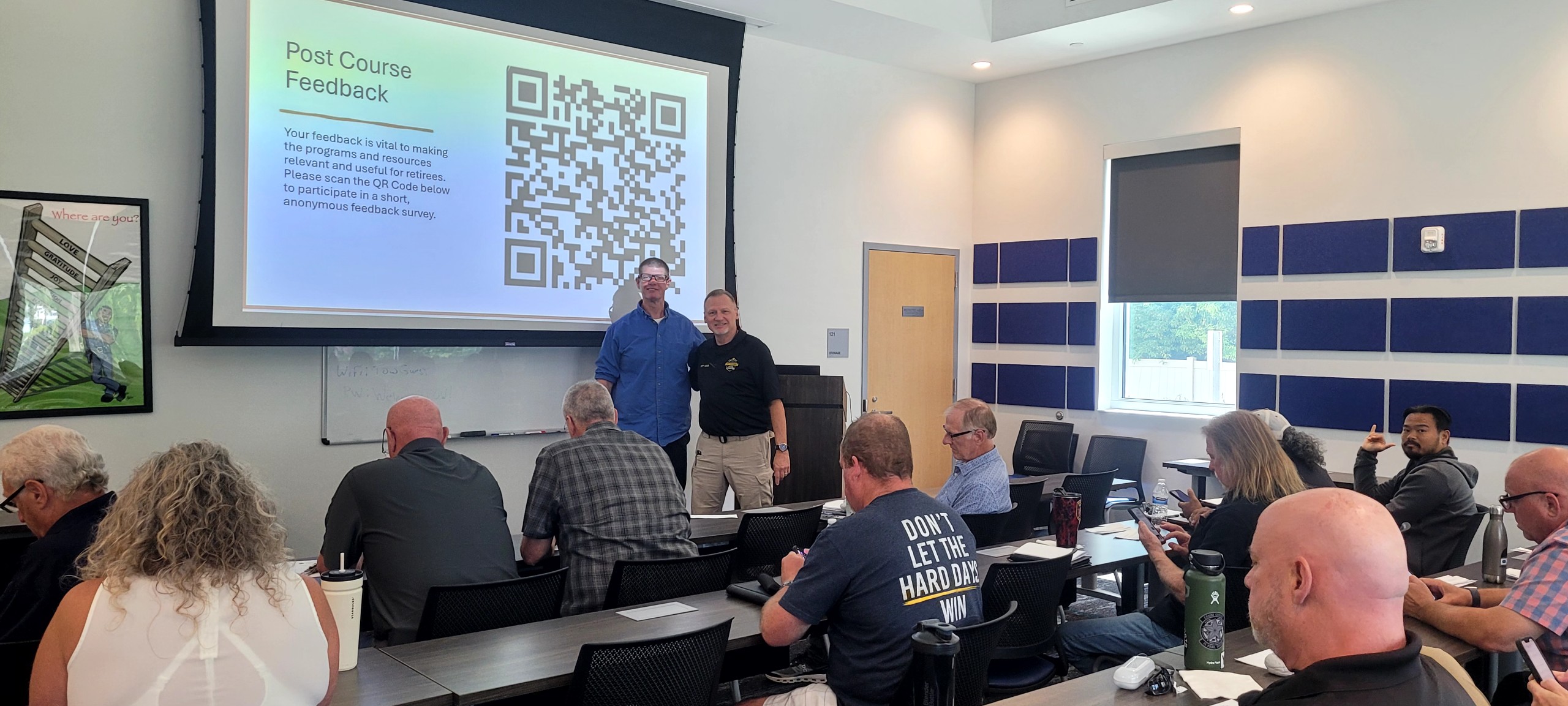
Developed by retired first responders for retired first responders, REACT for Retirees empowers those who have served to continue making an impact by providing peer support. The train-the-trainer program equips retirees with the tools, skills, and confidence to become peer support providers for other retirees by learning to recognize stress injuries, evaluate their peers’ mental health, and effectively coordinate necessary follow-up in the event professional intervention is warranted.
“We teach first responders how to be the first line of support for their brothers and sisters in distress, regardless of the cause,” said Deborah C. Beidel, PhD, ABPP, UCF Restores executive director, UCF trustee chair and Pegasus professor of psychology and medical education. “The specific modules teach peer supporters to recognize signs of stress and distress, assess the severity of concerning behaviors, advocate for reaching out to appropriate service providers when necessary, coordinate access to those services through introductions or warm handoffs, and track the outcome of service provision.”
Clint Bowers, PhD, UCF Restores director of resilience and prevention and UCF Pegasus professor, noted first responders suffer from a higher incidence of mental health issues than the general public.
“Research indicated that simply providing resources wasn’t sufficient. Many first responders were avoiding treatment due to stigma about mental illness and fear of occupational consequences,” he said. “Peer support offered a potential solution: Personnel might feel more comfortable talking to peers than to mental health professionals. REACT was our attempt to translate this intervention and build a structured peer support program specifically for first responders.”
Building on Success
Retirement represents a major life transition for anyone, but the lifestyle, culture, and work of first responders present a unique set of challenges, Beidel noted.
“As many first responders report, much of their identity is tied to their occupation,” she said. “First responders feel a sense of family, describing their co-workers as ‘brothers’ and ‘sisters.’ Retirement breaks these ties, and first responders often describe feeling alone. For many first responders, this loss of social support can lead to higher rates of depression, substance abuse, and for some, thoughts of suicide.”
Given the success of REACT peer support, it seemed logical to adapt the program to serve the needs of retirees, Beidel said.
“We could equip retirees to serve as social support for other first responders, a person they could reach out in times of distress,” she said. “For those who choose to be trained, it provides an additional connection to the first responder community. The response has been uniformly positive, and we look forward to continuing to disseminate the program to those who are interested.”
“Retirement is a major transition, especially after a career defined by high responsibility, adrenaline, and strong team identity,” said Kellie O’Dare, PhD, UCF RESTORES deputy executive director. “Some individuals adjust well, but others struggle with the loss of structure, purpose, and connection.
O’Dare said there are warning signs family and friends should watch for, including persistent sadness, irritability, or anxiety; increased alcohol or substance use; withdrawal from friends, family, or former colleagues, and expressions such as "I don’t know what my purpose is now" or "I miss the job every day." Retirees may also experience increased rumination about past calls or traumatic events.
Many of these signs aren’t unusual during major life transitions, O’Dare noted.
“But when they persist, intensify, or interfere with daily life and relationships, they signal that additional support could help,” she said. “Maintaining connections with former colleagues, engaging in meaningful activities, seeking peer support, or speaking with a mental health professional familiar with emergency services culture can all make a difference.”
It’s not just a loss of identity for some; the loss of camaraderie hits hard as well, O’Dare said.
“First responders work in tight-knit teams where trust and shared experience create strong bonds,” she said. “After retirement, that regular contact disappears and the informal support that comes from working side by side is no longer part of daily life.”
Emotional Resilience and Network Building
Beidel pointed out most civilians experience a few traumatic events in their lifetime.
“For first responders, traumatic events occur frequently; they are part of the job,” she said. “Not every first responder reacts with distress or anxiety to every traumatic event, but the cumulative effects of these events can become a heavy burden for a first responder to carry. And in some cases, there will be catastrophic events with a more significant impact. Stress injuries represent the aftermath of these events. The term ‘stress injury’ is used to signal the belief that, like physical injuries, recovery is possible. The outcome of trauma need not be a life sentence.”
In addition to peer support, REACT helps equip first responders with healthy coping strategies, O’Dare said. Those can include breathing and grounding techniques, exercise, peer support, and maintaining relationships outside of work. O’Dare said teaching these strategies is as important as training first responders on a defibrillator, BVM, and other tools.
“In the fire and EMS world, you would never want to pick up a tool for the first time in the middle of a call,” she said. “You learn how to use it during training so it becomes second nature when you need it. The same principle applies to emotional resilience. When these skills are familiar, they’re accessible during difficult moments, including the transition into retirement.”
Strong networks of retired first responders are built by maintaining the connections, routines, and sense of camaraderie that existed during active service, O’Dare noted.
“Many departments support through retiree associations, alumni groups, or informal gatherings—monthly breakfasts, coffee meetups, station visits—that reduce the isolation that can follow retirement,” she said. “Retired responders can also stay involved by mentoring younger members, assisting with training, or participating in peer support teams. These roles allow retirees to share their experience while maintaining a sense of purpose.”
Peer Support Matters
First responders are better positioned and equipped to notice early signs of depression or PTSD in their colleagues, Bowers said.
“Traditional resources often don’t reach people until they’re already in crisis,” he added. “When a mental health practitioner is required, peer supporters continue to play a role: reducing stigma, identifying sources of help, and encouraging peers throughout the recovery process.”
Bowers said REACT focuses on three goals that follow a natural progression.
“First, peer supporters learn to identify cues that suggest someone is experiencing distress,” he said. “Second, they develop conversational skills to understand the problem and help the peer identify potential solutions, including professional resources when needed. Third, they continue supporting peers through recovery and return to duty.”
Peer support programs matter because they reach people before problems escalate, Bowers noted.
“They reduce stigma about mental illness, take a proactive approach to identifying signs of distress, and share knowledge about treatment options,” he said. “This results in personnel seeking help earlier—ideally avoiding the development of more serious psychological or performance issues.”
Peer support is especially important in rural EMS systems, where access to behavioral health professionals is often limited and personnel operate within small, close-knit agencies, O’Dare said.
“Rural providers frequently work long shifts, cover large geographic areas, and may have fewer organizational resources than their urban counterparts,” she pointed out. “In these settings, peer support can serve as an immediate, accessible support mechanism helping identify concerns early and encouraging connection to clinical care when needed. For rural agencies that struggle with recruitment and retention, this matters: Healthier workforces are more sustainable workforces.”
Retired first responders bring experience, perspective, and credibility to the peer support table, O’Dare noted. Retirees also bring institutional knowledge and wisdom from decades of navigating difficult incidents.
“After years of service, they understand the realities of the job—the stress, the trauma exposure, the culture—in a way that allows them to connect with active responders authentically,” she said. “That credibility goes a long way in peer support and mentorship roles. They can help younger responders develop healthy coping strategies, share lessons learned, and offer reassurance that others have faced similar struggles and found ways through.”
“Perhaps most importantly, retired first responders can model what it looks like to navigate the transition out of the profession while still staying connected to the mission and to one another, helping ensure that the culture of support and camaraderie continues across generations,” O’Dare said.
Department Impact
Beidel said that feedback from those who have taken the REACT course centers on the tools participants receive that help have conversations that matter.
“Peers tell us REACT cuts through the noise, sharpening skills they may already have and focusing them specifically on recognizing distress, engaging meaningfully, and helping colleagues move forward,” she said.
Jeff Orrange, a lieutenant paramedic on an engine company with the Orlando Fire Department and shift peer for Orlando Firefighters Peer Support, said he’s seen how REACT and UCF Restores helps within his own department.
“We spend a lifetime seeing things most people in the civilian world won't see,” he said. “And sometimes we cram that lifetime of visions and trauma into one shift. If we didn't have an avenue like UCF Restores, a lot of our guys would not be still working today. A lot of our guys might not even be on the planet today.
“It’s not hyperbole to say that peer support has saved lives. The trust built between peer supporters and the departments that they serve allows personnel to reach out without fear. That support—delivered in confidence and without judgment—connects people with the services they need, resulting in successful resolution and resilience.”
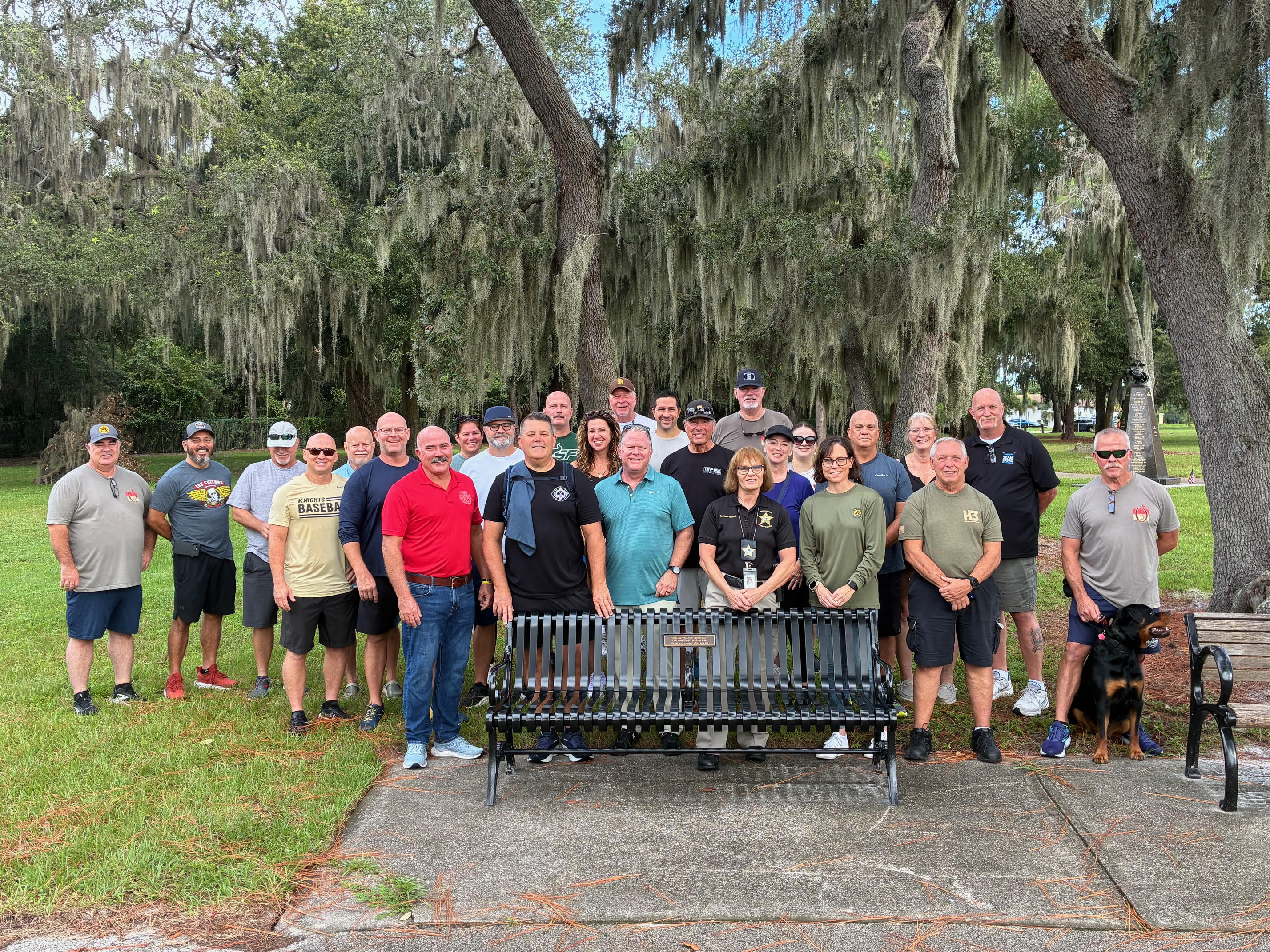
Joseph "Joe" McCluan is a retired Orlando Fire Department district chief with over three decades in fire and emergency services, and a REACT graduate who also helped co-author the REACT Retiree curriculum. He helped spearhead two peer-driven initiatives: The FD Kitchen Table, a monthly dinner gathering that helps Orlando retirees stay connected and the 988 Bench Project, which promotes awareness of the national Suicide and Crisis Lifeline through benches placed on local walking trails.
“We’re also aware of a community-led first responder memorabilia collection and museum in north Florida that was co-created by REACT peer program graduates,” O’Dare said. “They remain involved in maintaining the museum and use it as a way to connect retirees with new hires, extending the culture of peer support across generations.”
Beidel said her team defers to a department's decision on who should constitute their peer support team, as they best know their own culture.
“For REACT Retiree, we have found that most people interested in the training served as peer supporters during their active careers,” she said. “The most crucial aspect of any peer support program is trust. Personnel must have confidence in the people selected as peer supporters—confidence that shared information will remain confidential.”
UCF Restores is introducing Train the Trainer programs for REACT and REACT Retiree, with more information coming in July. Departments interested in providing REACT training for their peer support team can contact UCF Restores at reactpeersupport@ucf.edu.