







After EMS: The Boneyard
This article is part of an ongoing series from Mike Rubin. In this series, he’ll reflect on his career and share practical retirement advice for emergency medical personnel. Catch up on articles you missed.
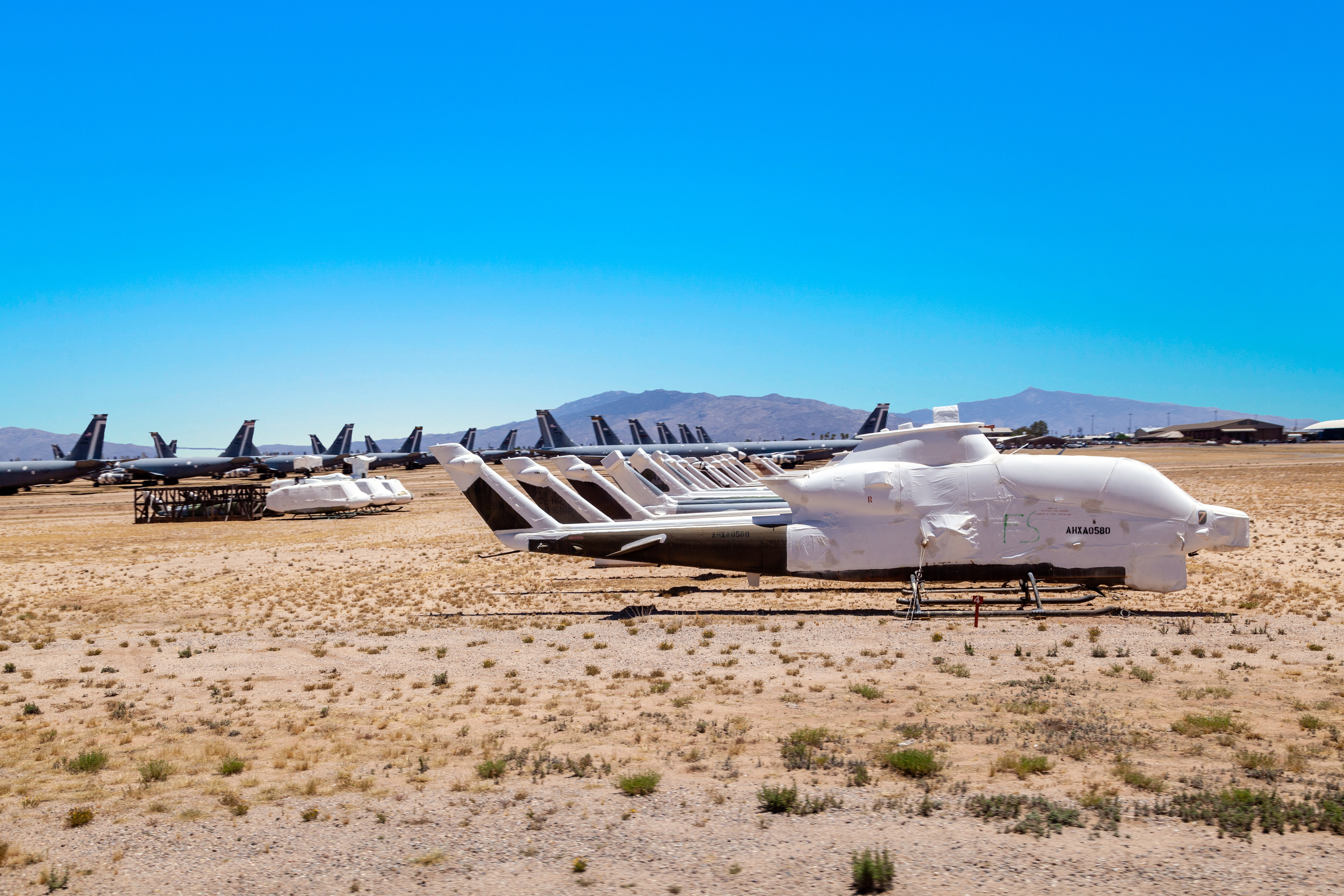
Five miles southeast of Tucson, Arizona on 2,600 acres of Davis-Monahan Air Force Base is “the boneyard,” a storage area for 4,000 excess and obsolete U.S. military aircraft. Each year, a few dozen fighters, bombers, and attack planes that haven’t yet been stripped for parts are refurbished there for active duty here or abroad. The longevity of that small fill-in fleet is a tribute to the original manufacturers plus Davis-Monahan maintenance personnel who, in some cases, extend the useful life of those machines years beyond specs.
I wish I had a doctor who could extend my useful life. Being useful is so much better than just being alive. Ask any retired medic.
If EMS had a boneyard, I’d be in it along with thousands of idle responders hardwired with clinical know-how undervalued by the public. I had some experience with that as a potential replacement during the COVID-19 pandemic, when Tennessee made it easy for the newly retired to regain certification by satisfying all CME requirements online. I used that opportunity to renew my license one last time, then waited months for agencies around the U.S. to accept my offers of assistance.
No one was interested, not even New York City and its suburbs, where I’d spent my first 11 years as a paramedic. Maybe 68 was too old, or they found enough help closer than Tennessee. All I know is that New York could have had at least one more medic looking for a fresh challenge. Instead, I felt as useless as a B-52 on three engines. Even a pandemic had no place for me.
My two years in that virtual boneyard passed quickly without seeing a single patient. At first, I thought I might have retired too early, but then I realized unretiring was the problem. It wasn’t the only time I’d sought success by reversing course. Does that ever work?
Don’t be like me. Once you’re done with EMS, quit imagining a triumphant return. Avoid the following:
- Trying on old uniforms: They won’t fit, not like they used to. Zippers struggle, buttons pop, and whatever you find in the pockets is probably drug resistant.
- Playing with obsolete equipment: My last agency kept a Lifepak 10 as an emergency replacement for newer monitors. I would buy one if I could, just for the memories. Then I’d remember I have no license to use any medical equipment more sophisticated than a thermometer.
- Saying you spent time in “the boneyard”: That sounds uninspiring and scary. People will think you worked at a low-rent, orthopedic doc-in-the-box featuring minimally invasive amputations.
- Streaming medical media: Slick Hollywood exaggerations of unlikely EMS street scenes are bad enough, but my least favorite clinical production is a YouTube video titled Most Painful Surgeries. The ten procedures to avoid are nightmarish for old medics who are learning to be patients.
- Telling war stories: It’s tough to be entertaining when you and your audience have done the same things. Listening to war stories is hard, too, if you’re no longer an insider. Try talking sports instead.
- Complaining about generations other than your own: There is no “greatest generation” in EMS—just a bunch of likeminded lifesavers who face similar challenges independent of age. The job is less about technology and more about a willingness to take purposeful risks.
I’m done. Just pass that plate of pay-me-no-mind and put me back in the boneyard. My new goal is to find both halves of a Lifepak 5.
Mike’s Exit Poll #16: If you could swap one day of retirement for a workday, where would that be?
I’d spend it as a medic in a nonemergent facility where documentation is neither automated nor artificial; somewhere unhurried, not very structured, with a maximum of, say, eight patients a day per provider. I’d take my time with assessment and chase the goal of wellness for one more shift. Then I’d sum up success not by minutes between calls, but by hours outside the boneyard.
Mike Rubin is a retired paramedic and the author of Life Support, a collection of EMS stories. Contact Mike at mgr22@prodigy.net.