










Emerging Strategies to Reshape Frontline Treatment of Diffuse Large B-Cell Lymphoma
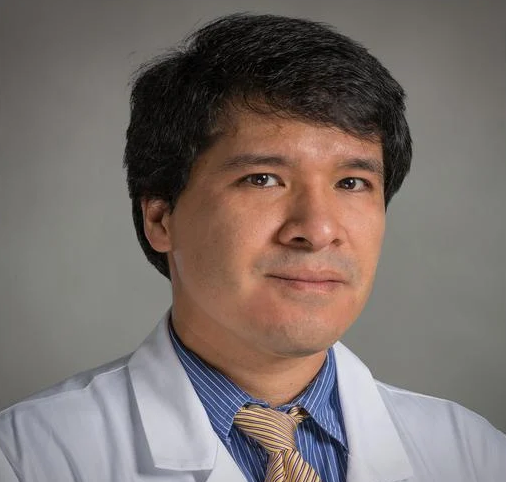
At the 2026 LL&M Winter Symposium in Amelia Island, Florida, Sarah Rutherford, MD, Weill Cornell Medicine, New York, New York, discusses recent advances in frontline treatment of diffuse large B-cell lymphoma and how emerging data are reshaping clinical practice.
Dr Rutherford highlights long-term outcomes with polatuzumab vedotin plus R-CHOP (pola-R-CHOP), ongoing trials incorporating CAR T-cell therapy and bispecific antibodies, evolving strategies for older patients, and the growing role of genetic subtyping and ctDNA to refine treatment selection and disease monitoring.
Transcript:
My name is Sarah Rutherford and I am from Weill Cornell Medicine in New York. I'm here at the Winter Symposium for LL&M in 2026, and I was given the assignment to talk about frontline diffuse large B-cell lymphoma and how the 2025 data has impacted our management, which is a really exciting area because for many years we treated all patients the same with R-CHOP and now we have the durable POLARIX data showing the sustained PFS at the 5 year time point of the pola-R-CHOP regimen over R-CHOP, which seems to be particularly effective in the ABC subtype of diffuse large B-cell lymphoma.
We now have a number of exciting trials, one of which is ongoing called the ZUMA-23 trial, in which CAR T is incorporated in a randomized fashion early in a patient's course of frontline therapy. We have two phase 3 trials that are assessing bispecific antibodies and standard of care versus standard of care, which we're waiting to hear the results for, and then there are some other strategies that are being tested in older patients. A big highlight of ASH 2025 was there were probably five key trials with diffuse large B-cell lymphoma in older patients and I really went into the details of these different trials, and we look forward to learning more about these strategies over time so we can refine treatment for older patients.
The other two exciting topics I focused on were the genetic subtypes of diffuse large B-cell lymphoma, which have been described by the NCI group and the Dana-Farber group and in the UK as well. We now have these two different algorithms, DLB class is one of them, in which we can incorporate various mutations to understand what cluster a patient would fall into. There's five to six of these clusters and there's a trial that's being planned by the National Clinical Trials Network where patients will be randomized after 1 cycle of standard treatment to these different mutational groups and have either standard of care versus standard of care plus a targeted agent, which i think is going to be a really great informative trial.
Lastly ctDNA is really becoming well studied in diffuse large B-cell lymphoma and we look forward to being able to use it to help guide our treatment decision making: during treatment, after treatment, in relapse or during the surveillance period.
Source:
Rutherford S. Updates in upfront diffuse large b-cell lymphoma (DLBCL) informed by 2025 data. Presented at Lymphoma, Leukemia & Myeloma Winter Symposium; January 30 - February 1, 2026. Amelia Island, Florida.